Constructed for the Camera
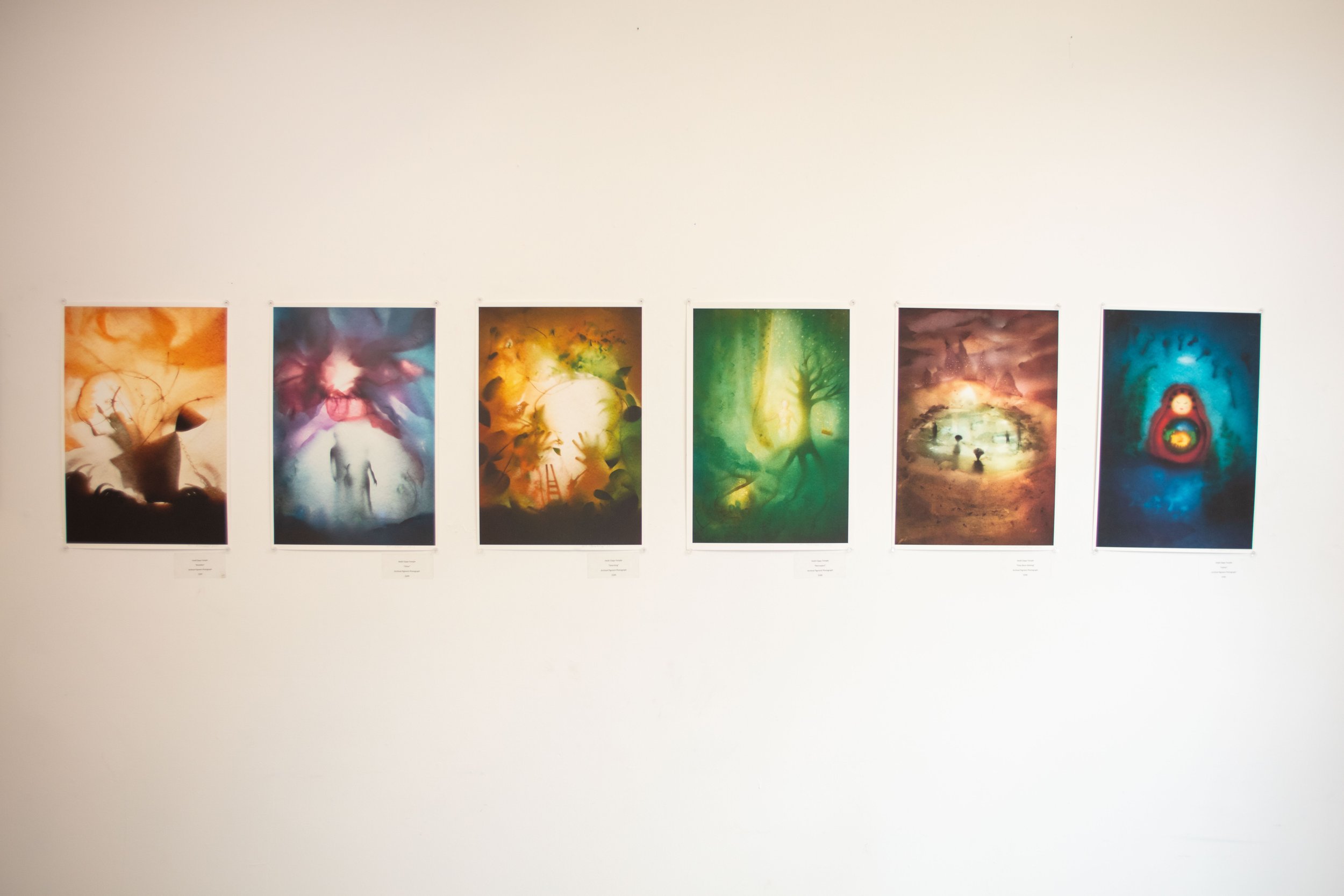
Recently at Honey Gallery, photographer Heidi Clapp-Temple exhibited Constructed for the Camera, a series of dreamlike narrative photographs. Each image was created using her signature method of photographing miniatures using lights and filters on a tabletop. Hazy fields of color blend into each other as if they’re digital illustrations—but they’re not.
Clapp-Temple earned her BFA in Fine Art Photography from Syracuse University, has shown in galleries in New York City, and has been reviewed in well-known photography publications. She has a studio on the third floor of Kress Contemporary, and is a fixture of the Ybor City art scene. Constructed for the Camera, on the second floor of the Kress, came together with not much more than a moment’s notice.
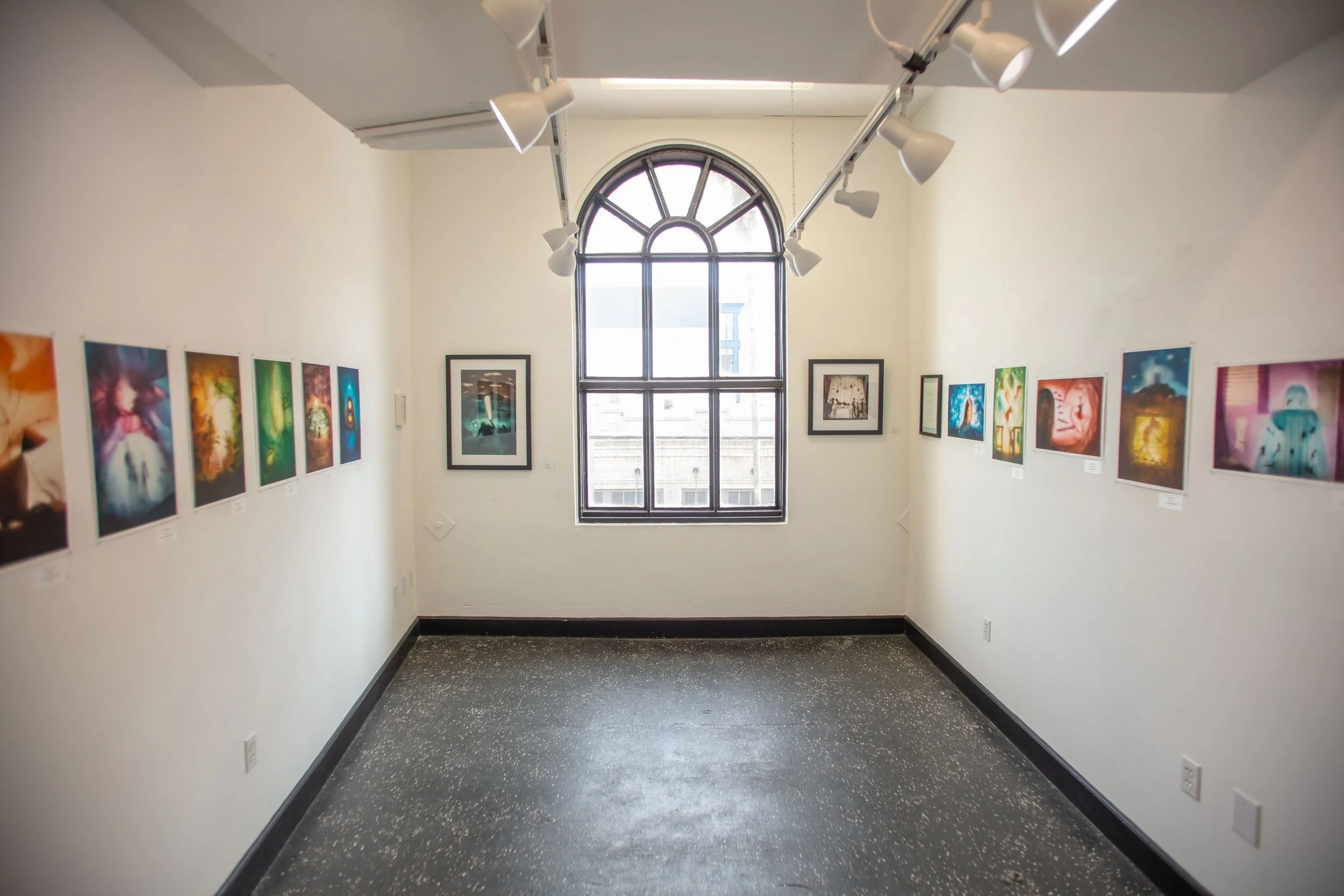
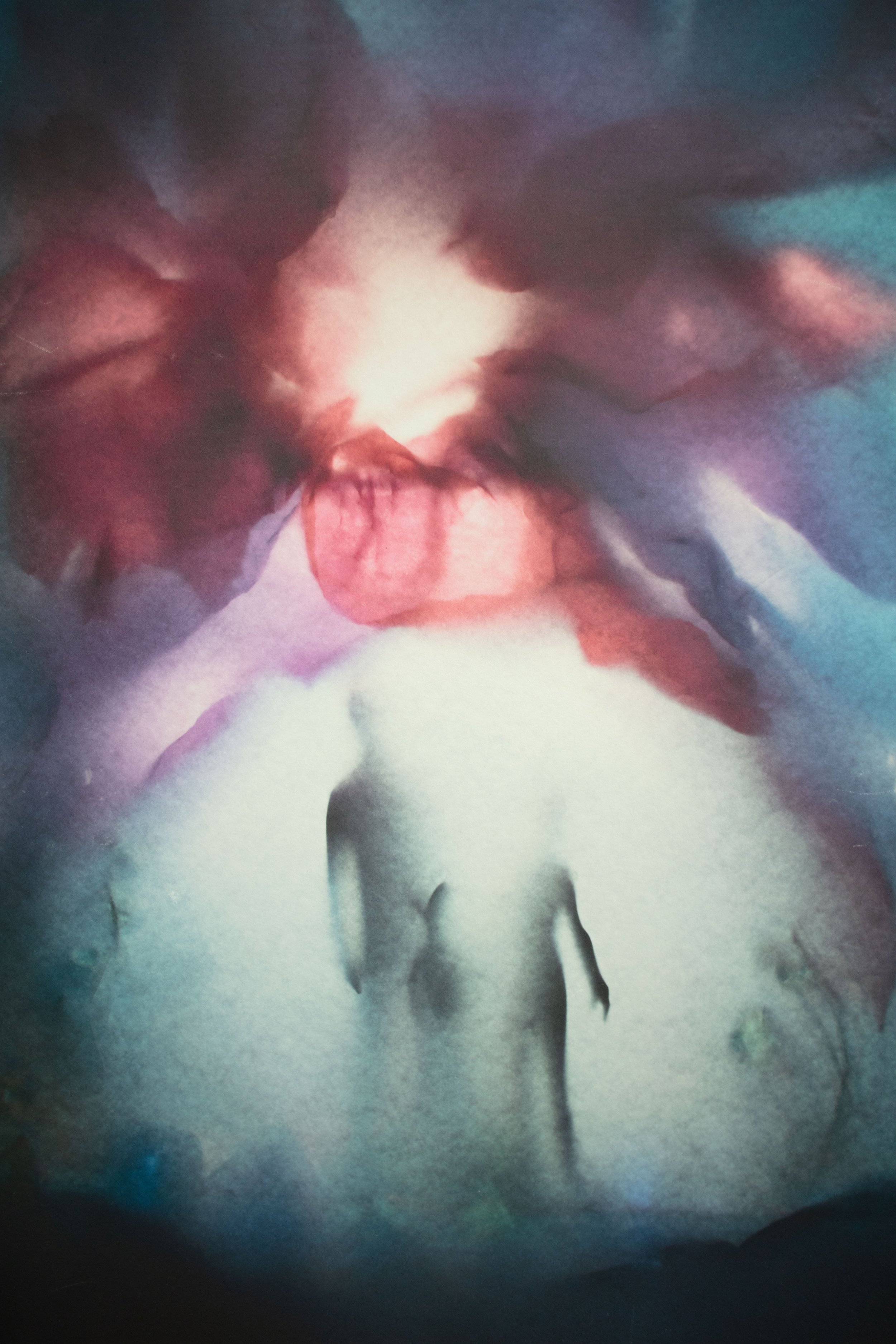
Created without the help of digital compositing magic, the photographs in the exhibition were created in-camera, but give a surreal, watercolor-like impression. Vibrant primary colors, textured watercolor paper, and hazy focus make them look like childhood memories that’ve been half-forgotten over many years.
Ether shows a trio of silhouettes, possibly a family, emerging from a cloud of blue like aliens emerging from a spaceship. The boundaries of their bodies blend into their surroundings, leaving little distinction between foreground and background. Above the trio is a rose-like burst of magenta, at the center of which is an aperture of light. A dense fog is mplied in its atmosphere, and the ground appears as a spooky forest.
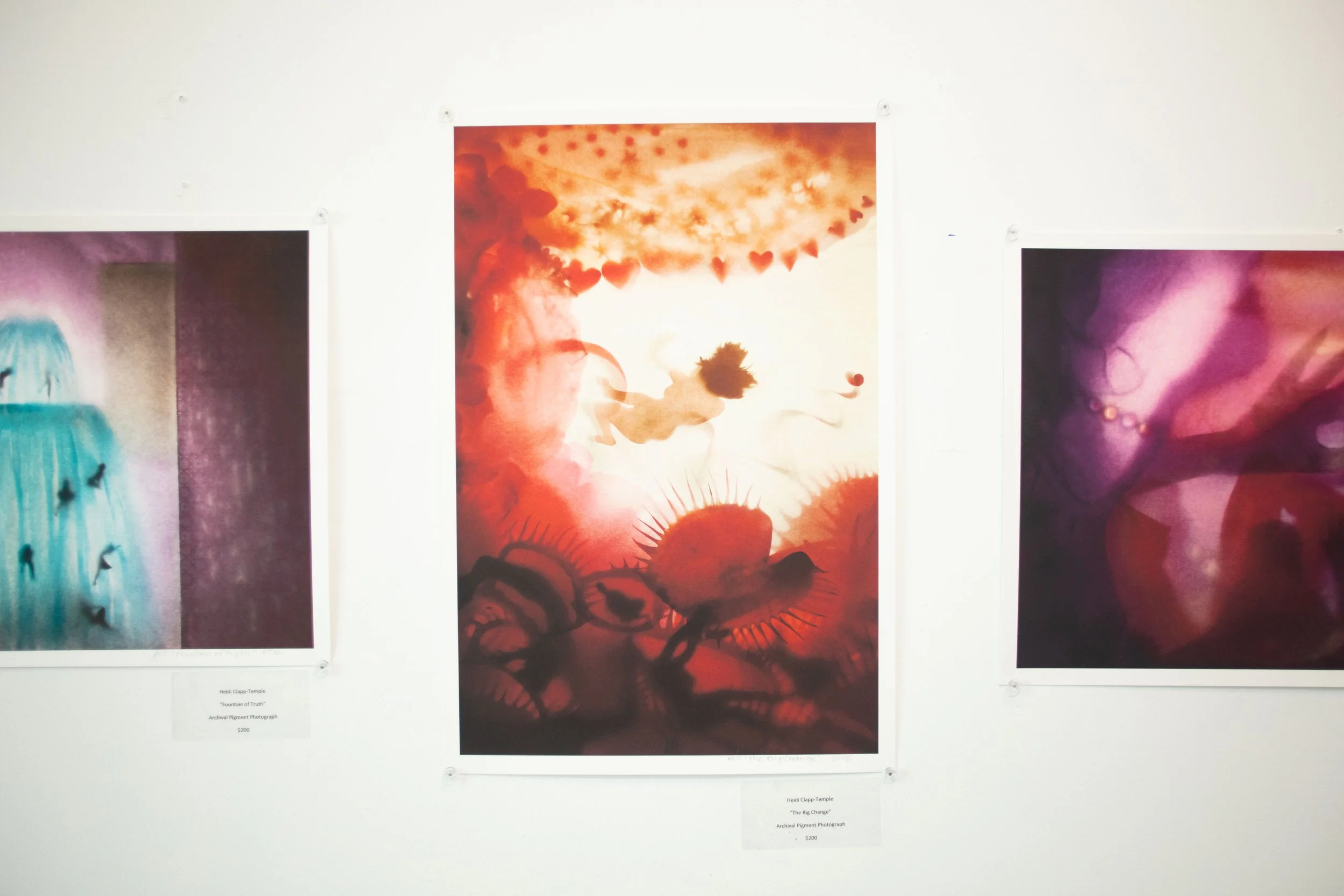
The Big Change looks like it takes place in the bloodstream. It’s monochromatic, mostly reds, and depicts a nude woman suspended above a hungry swarm of venus flytraps with mouths agape. We’re not sure if the woman is falling or flying, and we’re not sure what kind of gravity surrounds her. Along the top of the composition is a strand of red hearts and stars that soar above the woman like flags over a used-car lot. The brownish-red splotch signifying the woman’s hair implies chaotic, out-of-control energy, as if the change this piece depicts is not a smooth one.
Clapp-Temple is a mother. She references the experiences of motherhood—and aging—in her work. There’s a subtext of redefining herself in her work, especially how she balances her family with her art. Although colorful, which may be associated with cheeriness, her photographs contain an element of melancholy and loss.
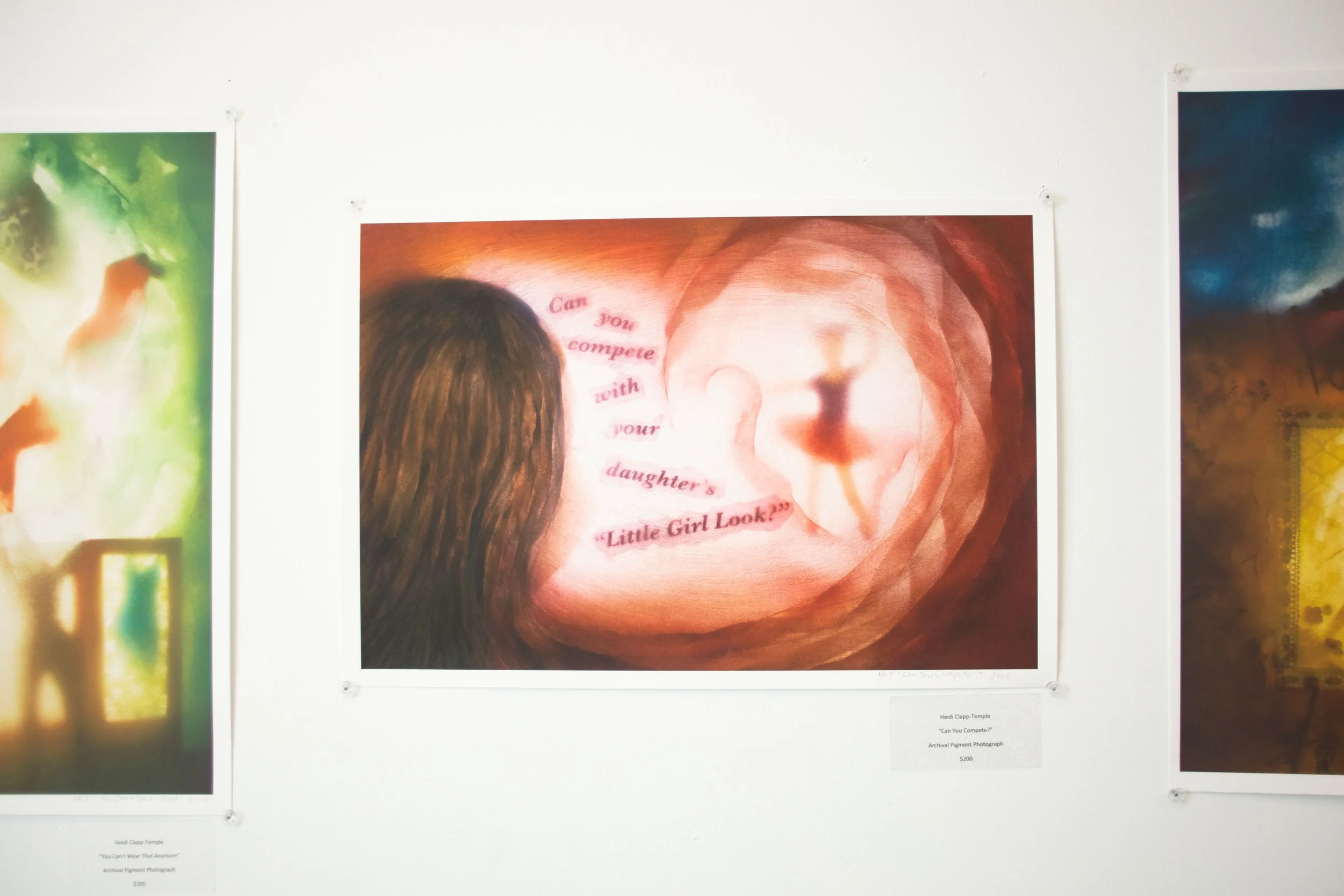
Can you compete with your daughter’s “Little Girl look?” is a red swirl of a composition with the back of a woman’s head to the left and dancing amateur ballerina with pigtails to the right. In the middle is the piece’s eponymous text in bold font, hovering in between, separating, the figures. The woman, despite being represented simply by long stands of brown hair, is in sharper focus than the youthful dancer. We’re left to ask, “Is this a self-portrait of the artist? And if so, is she peering toward her daughter or to her younger self?” It’s a vulnerable acknowledgement of the changing self during motherhood in terms of age, sexuality, and independence.
This relationship comes to fruition with Gather, a dreamy portrait of a figure resembling a Russian nesting doll with a glowing orb in its womb. The eyes of the doll are peacefully closed, a smile on her face, trees and sky swaddling her to sleep. A conga line of keys dances above her head, like she’s dreaming, and she has mushrooms and toadstools at her feet. The photograph gives the vibe of a good psychedelic trip where all the world’s creatures are in harmony.
It’s hard to not think of the work of Laurie Simmons when viewing Clapp-Temple’s photographs. Both artists use miniatures to create narratives, and both utilize the experience of womanhood and motherhood to exhibit strength. Where Simmons places us in a domestic setting, Clapp-Temple transports us to a land of fantasy.
Constructed for the Camera exemplifies how vast photographic form has become in the digital age. What looks like a watercolor painting is actually a photograph. The suspension of disbelief has a low threshold in Clapp-Temple’s photographs, which is how we get so enthralled by them so easily.

By Tom Winchester