NADA Miami ‘25
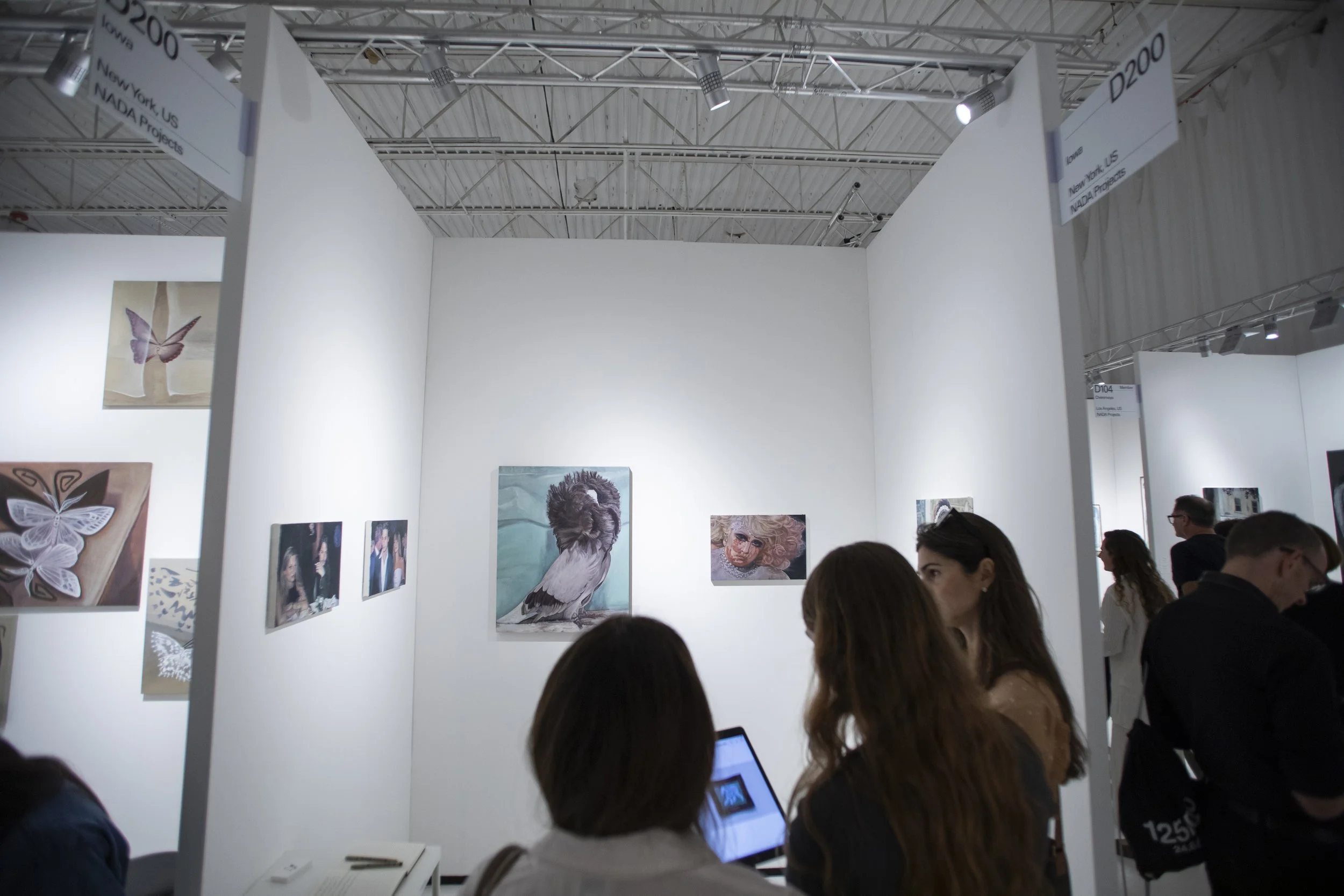
For viewers, art fairs are great opportunities to see contemporary art from around the world. It’s a time to discover something new. That’s why the New Art Dealers Alliance is so interesting. Unknown and up-and-coming artists, entrepreneurial dealers and curators, enthusiasts-turned-collectors; everyone’s full of energy.
Located on the mainland, away from island gridlock, NADA offers small booths of art that consist mostly of static works presented on the wall such as paintings, photographs, and small sculptures. Because most of these galleries are from places far from Miami, they have to negotiate between what they want to show, what they can feasibly fit into their booth, and what they think will sell. So, it’s no surprise that there aren’t too many large-scale installations or billboard-sized mega-works, though there are a few.
Curatorially, some of these galleries were able to make the experience of their booth seem like we were somewhere else. A bustling, cramped environment, sometimes an art fair can be more like a torture chamber than a white cube. That’s why it’s impressive when a gallery presents works in their booth in a way that somehow makes it feel like there’s ample space, or like aesthetics has been prioritized. Most attendees won’t be buying anything, so it’s nice when the gallerists treat the fair more like an extension of their programming instead of Toyotathon.
NADA offers interesting works from galleries across the globe. Some of my favorites were from Seoul, Austin, Los Angeles, Brooklyn, and Buenos Aires. Overall, it seems like a Pop sensibility has allowed for celebrity culture to be a fruitful subject, figuration in painting no longer seems passé, and identity politics is no longer offered at a premium.
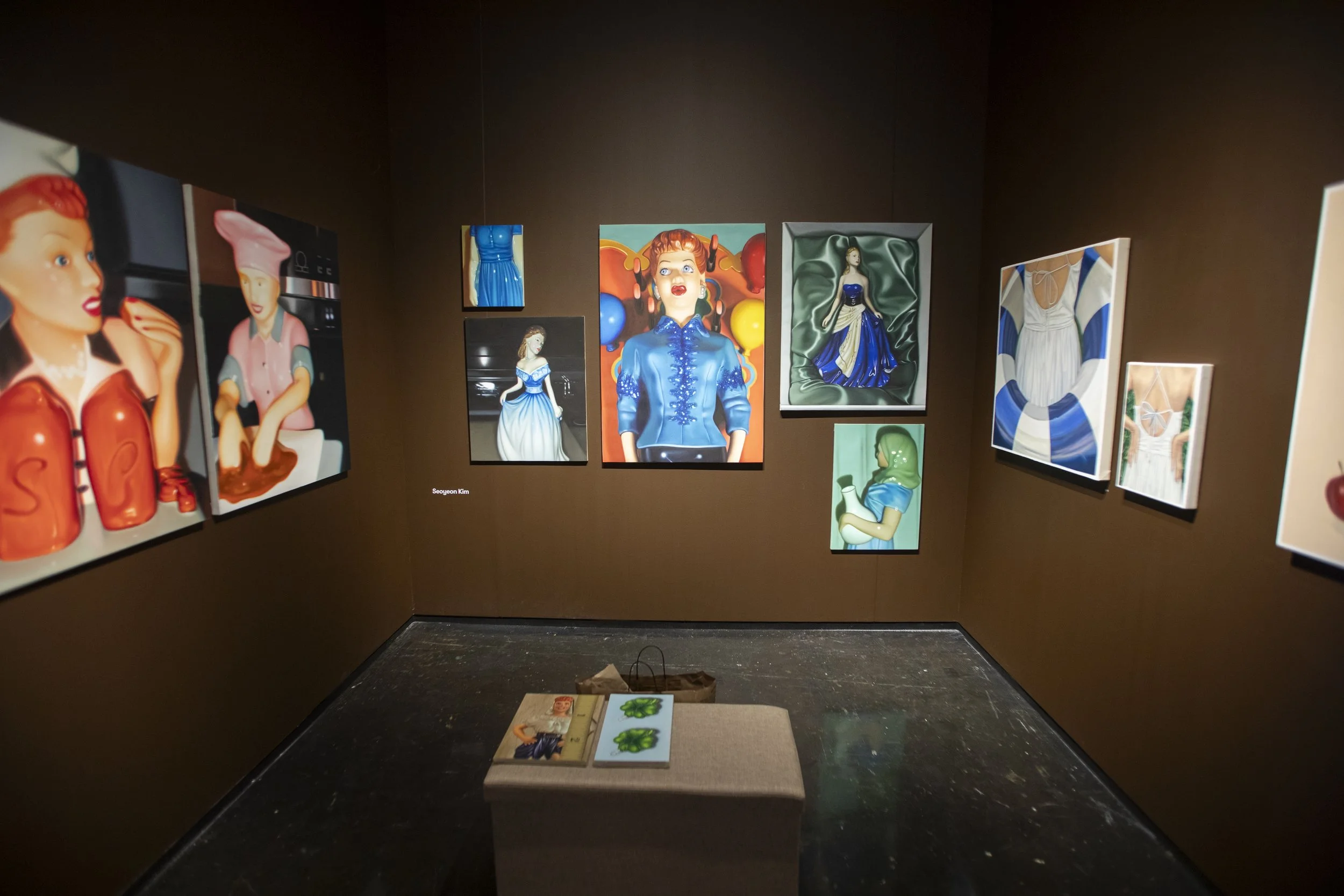
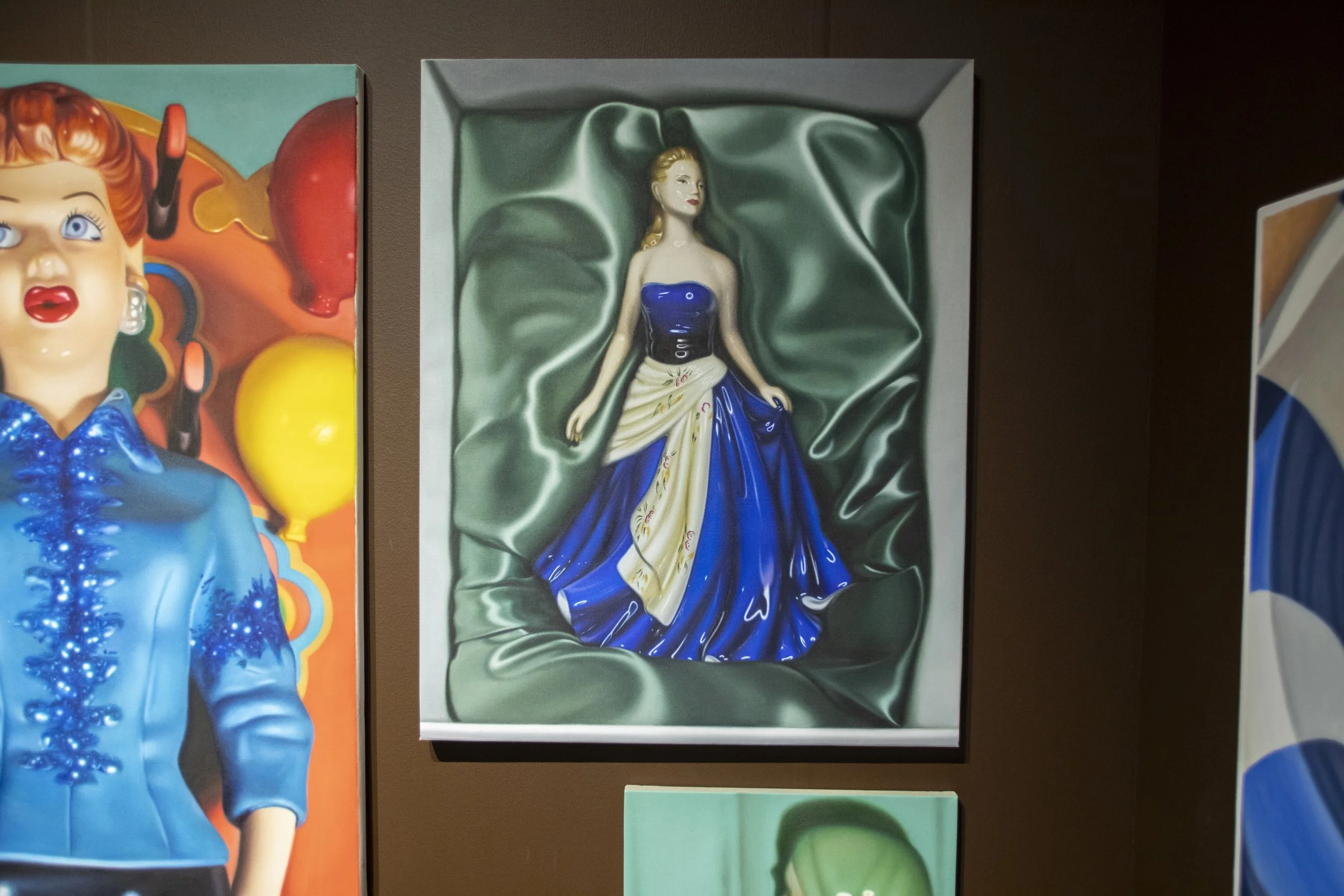
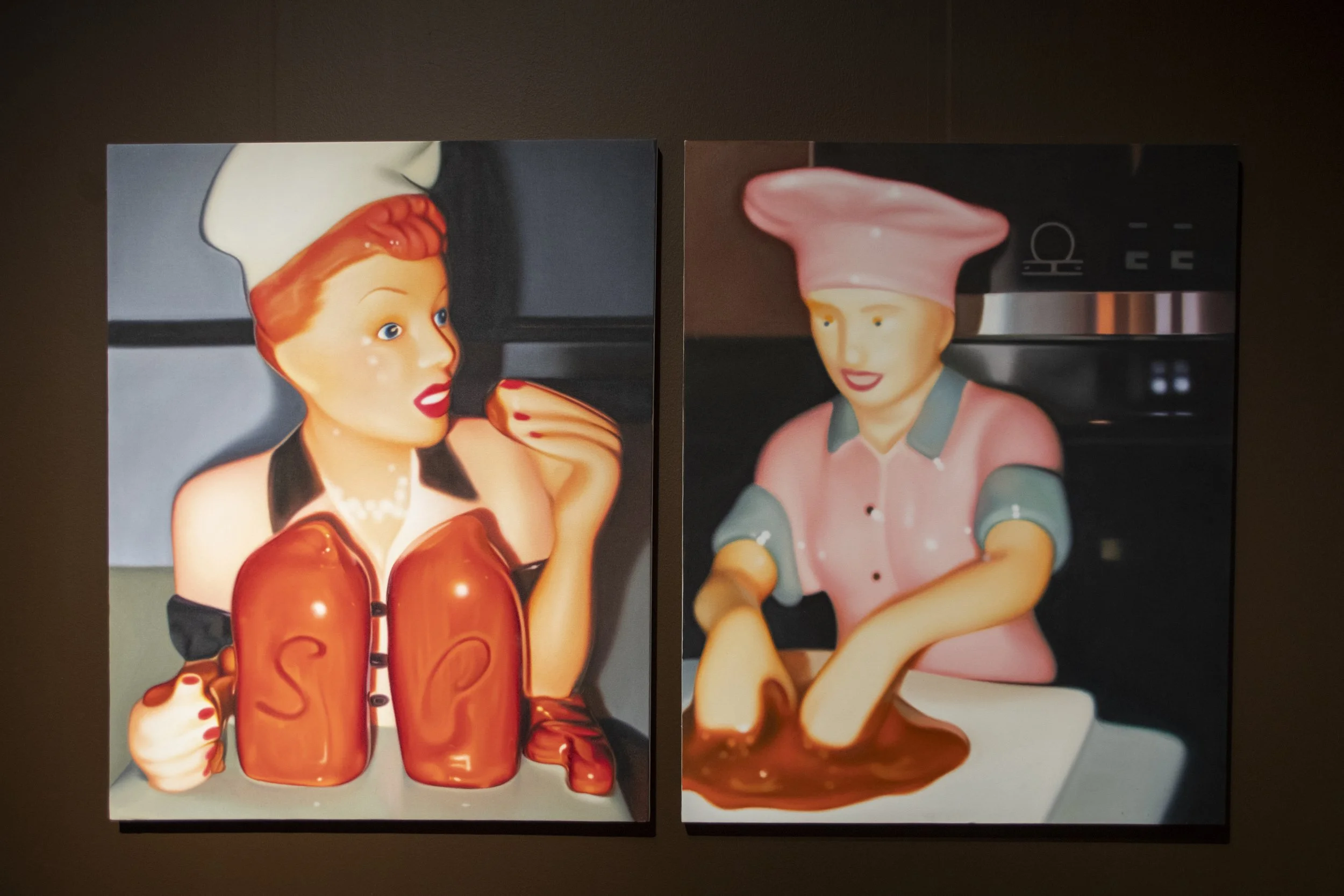
Seoyeon Kim’s oil paintings of figurines on view in Dohing’s booth look like photographs printed on canvas. Their hazy edges and vibrant colors give the feeling of Cibachrome, and their miniature world could be right out of the Pictures Generation, specifically the work of Laurie Simmons. They were perfectly sized for the booth, and the brown-painted walls created a comforting environment that felt like your grandma’s living room.
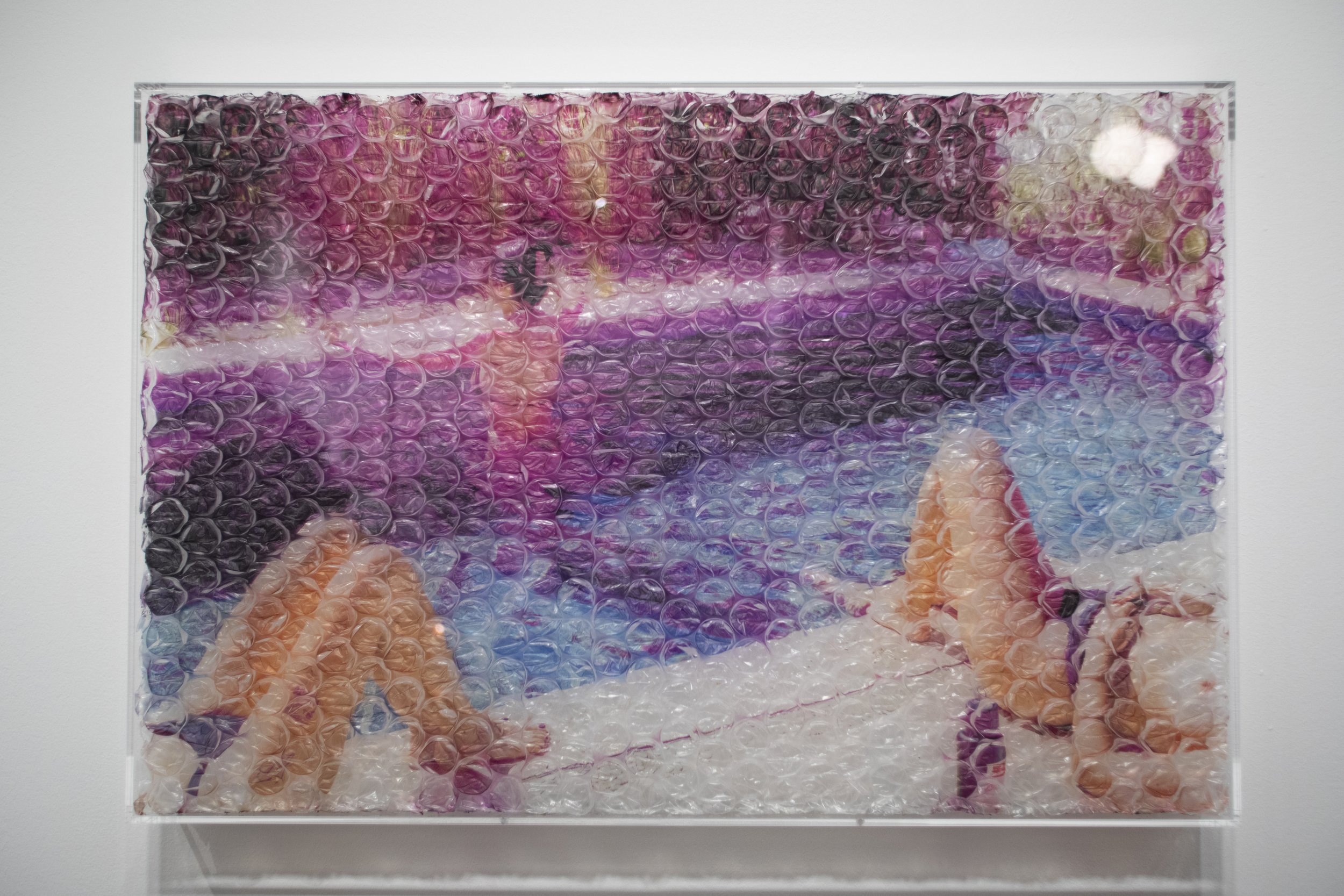
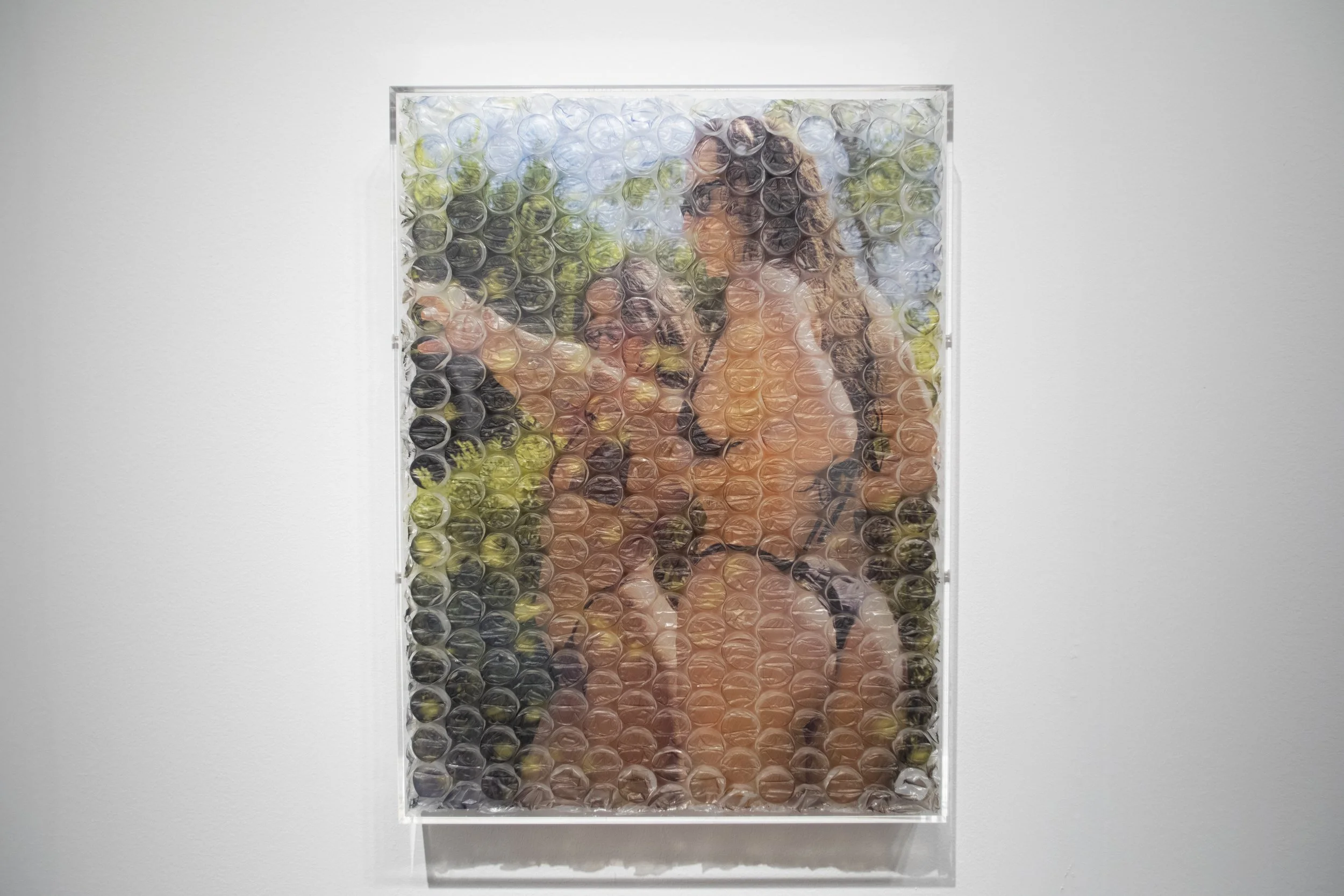
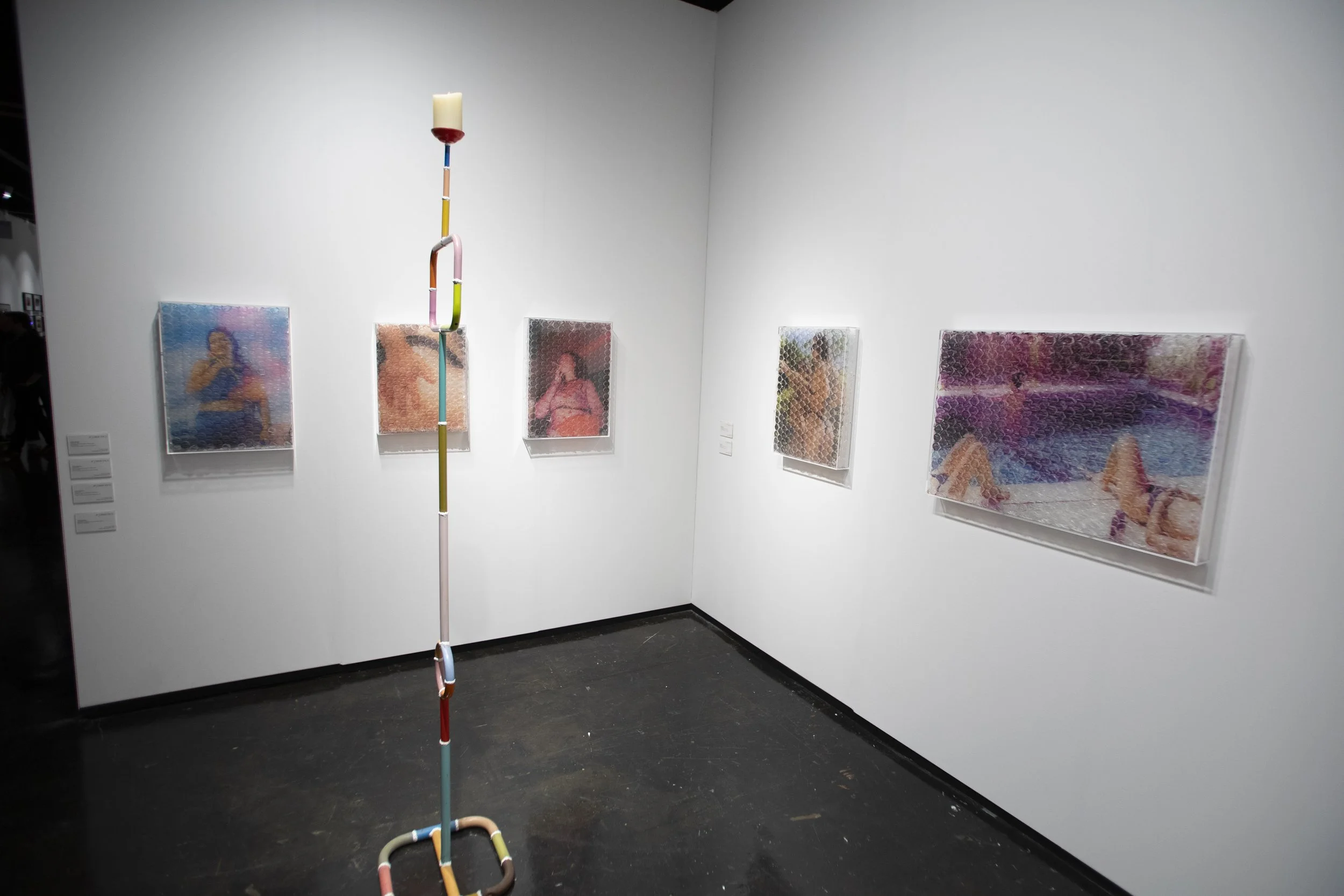
McLennon Pen Co.’s presentation of works by Rosie Clements is very unique. By printing photographic images directly onto bubble wrap, Clements’s process inverts the preciousness imbued in art. The bubble wrap doesn’t protect the art, it is the art, and by printing the image on the surface of such a material, the image becomes more vulnerable to deterioration than if it had been printed on paper or another traditional photographic ground that would ultimately be preserved by a frame and bubble wrap. They benefit from in-person viewing because, in reproduction, they look like photographs wrapped for storage.
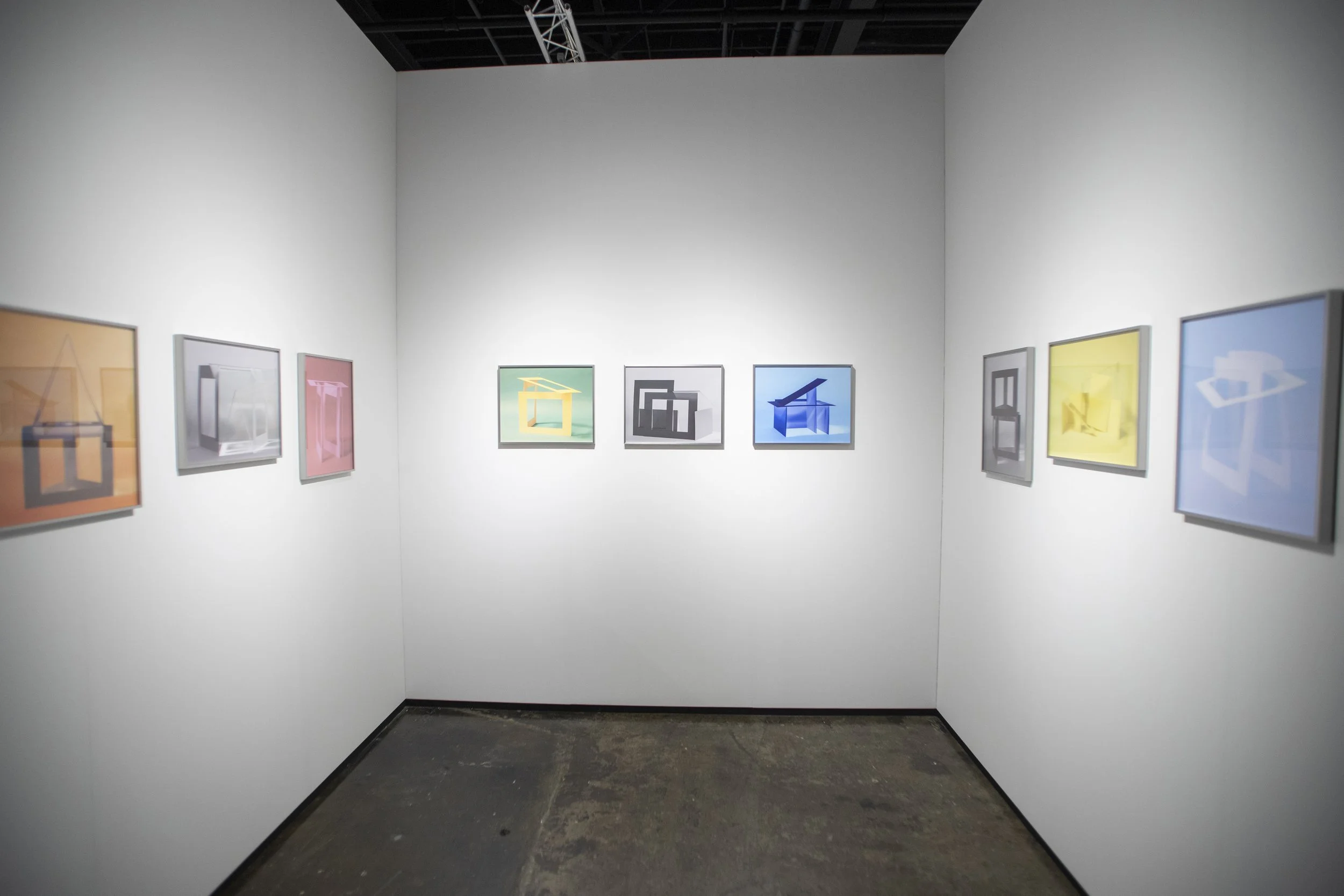
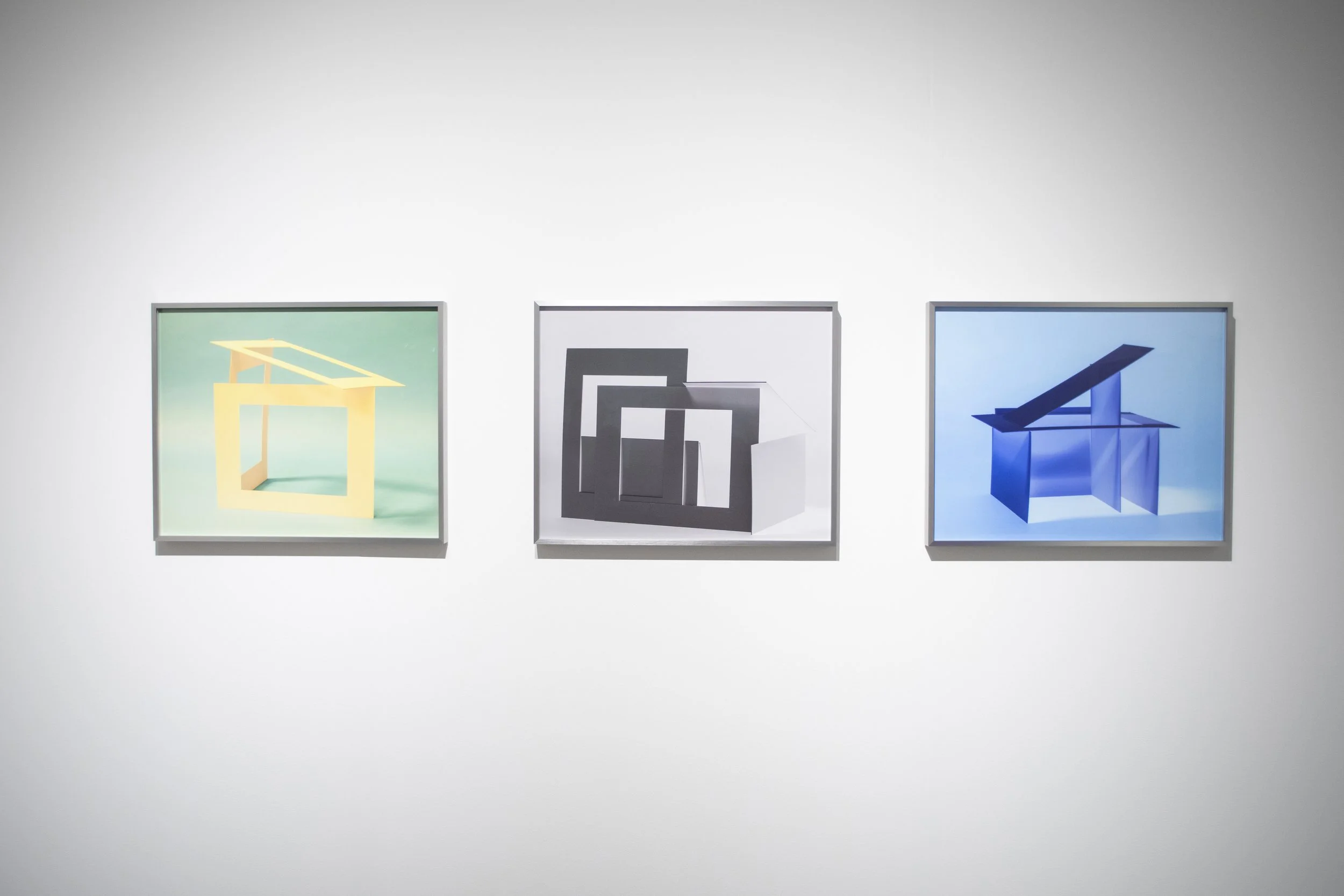
My favorite photography on view at NADA is a presentation of abstractions by Lenard Smith in the booth by Central Server Works from Los Angeles. These color still lifes depict the mats used for framing arranged standing upright and at angles that accentuate shadow and light. Called the Regarding Structures series, the photographs use objects peripherally associated with photography as stand-ins for the medium in a way that’s similar to James Welling’s Drapes. Simple, elegant, genius.
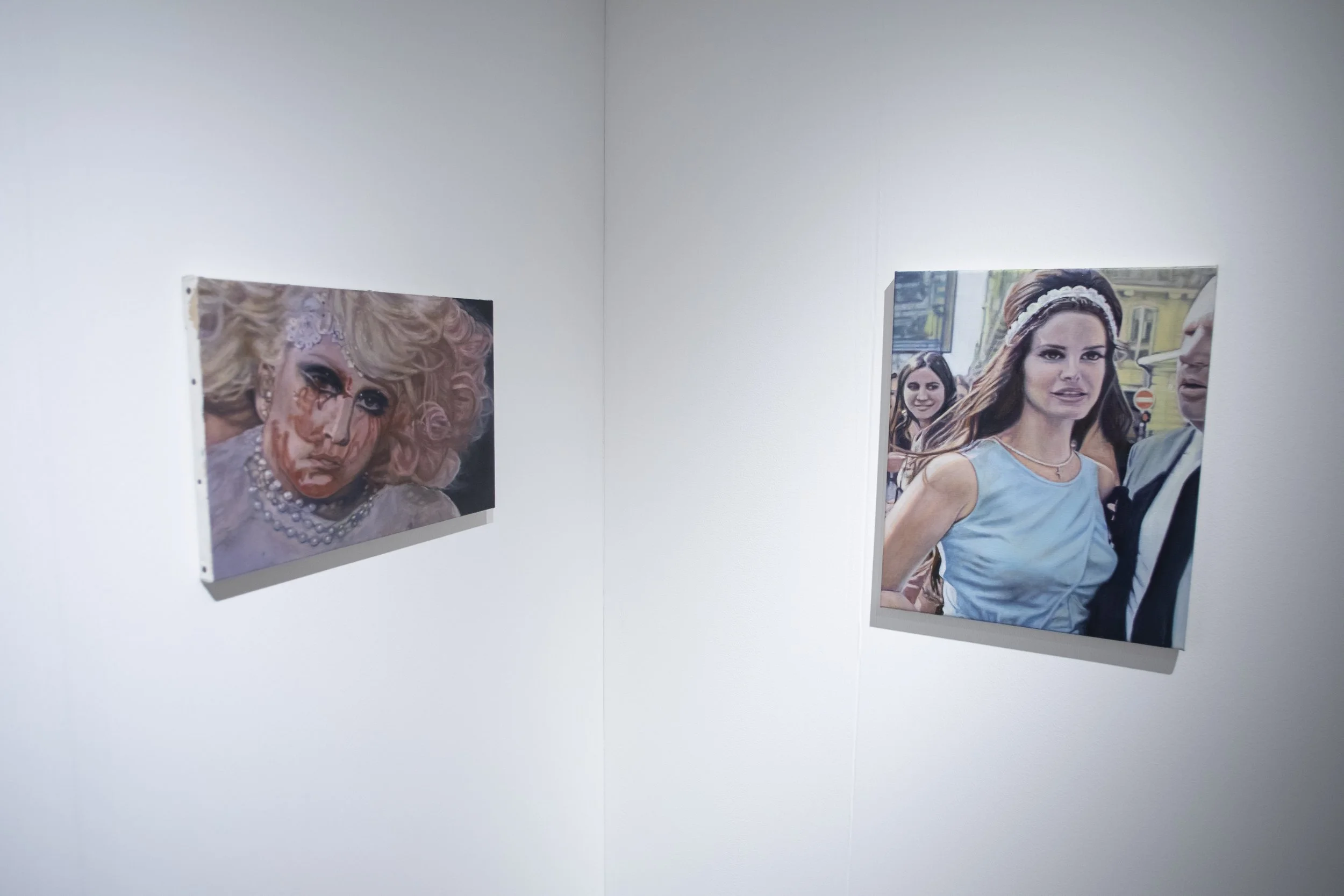
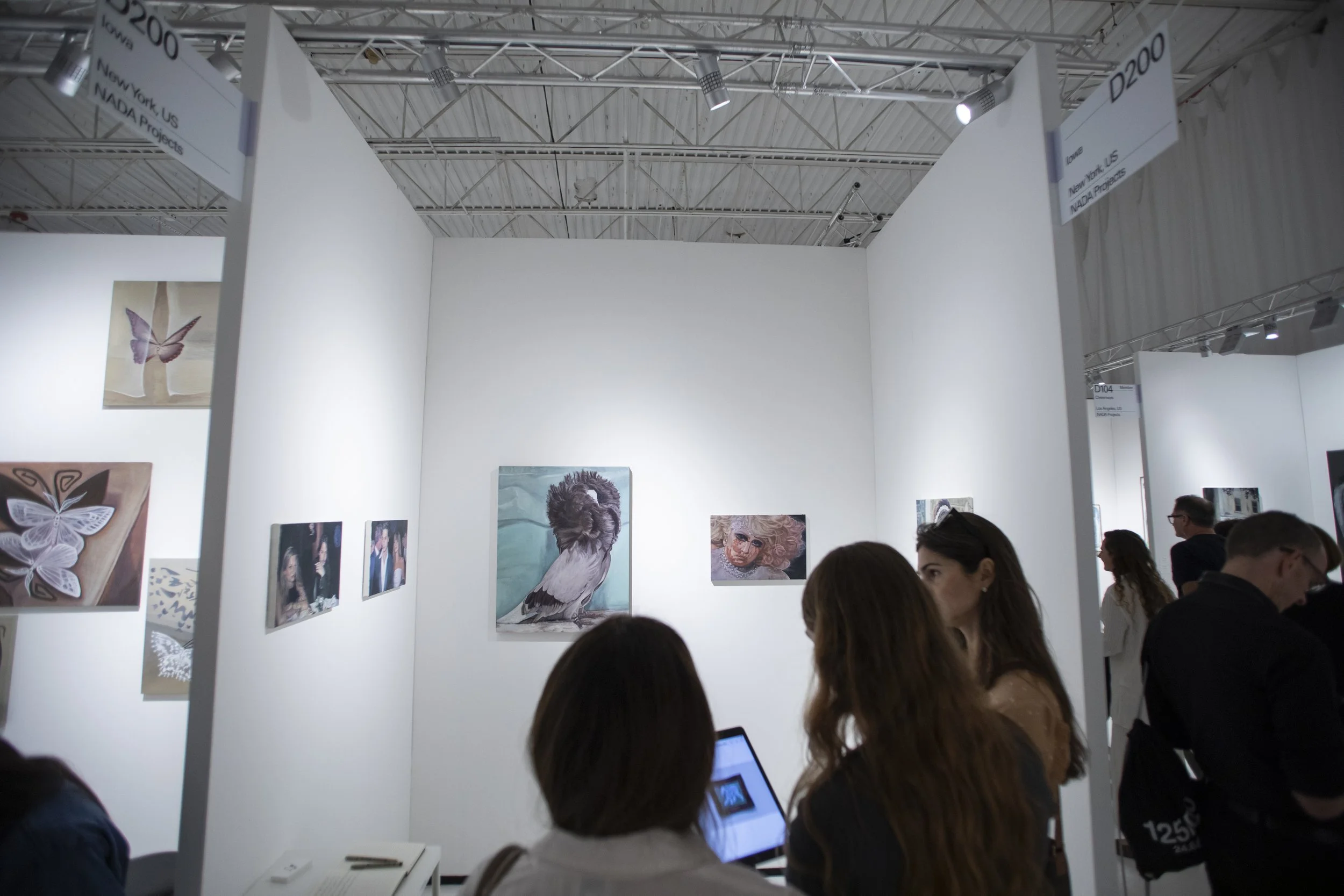
NADA Projects, in the back room of the fair, had even tinier booths than the front rooms, but had some of the most experimental art. Iowa is based in an apartment in Crown Heights, Brooklyn, and its tiny booth has a few small paintings by Ingrid Hansen. The paintings depict well-known celebrities from well-known paparazzi and promotional photos mixed with art historical Easter eggs.

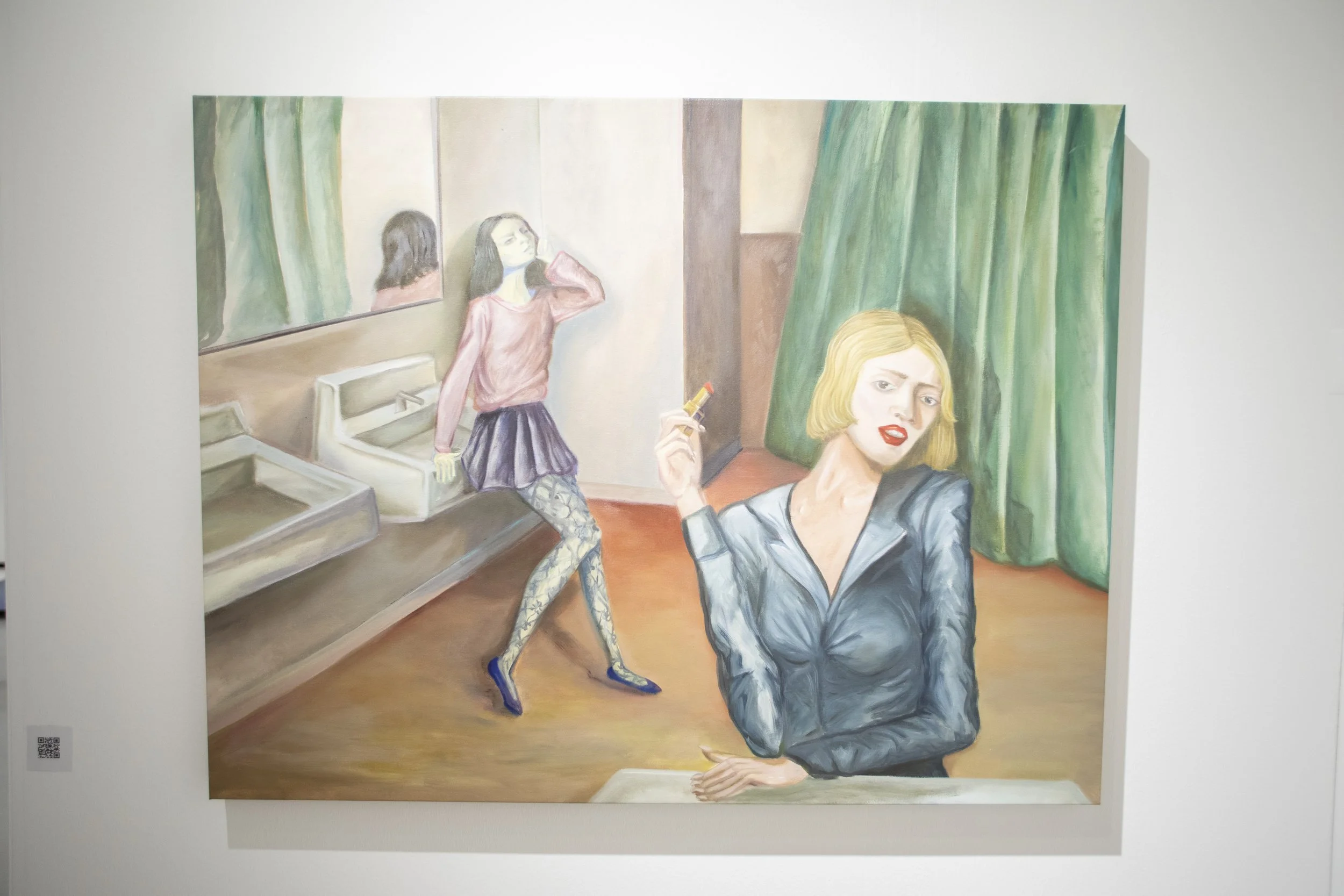
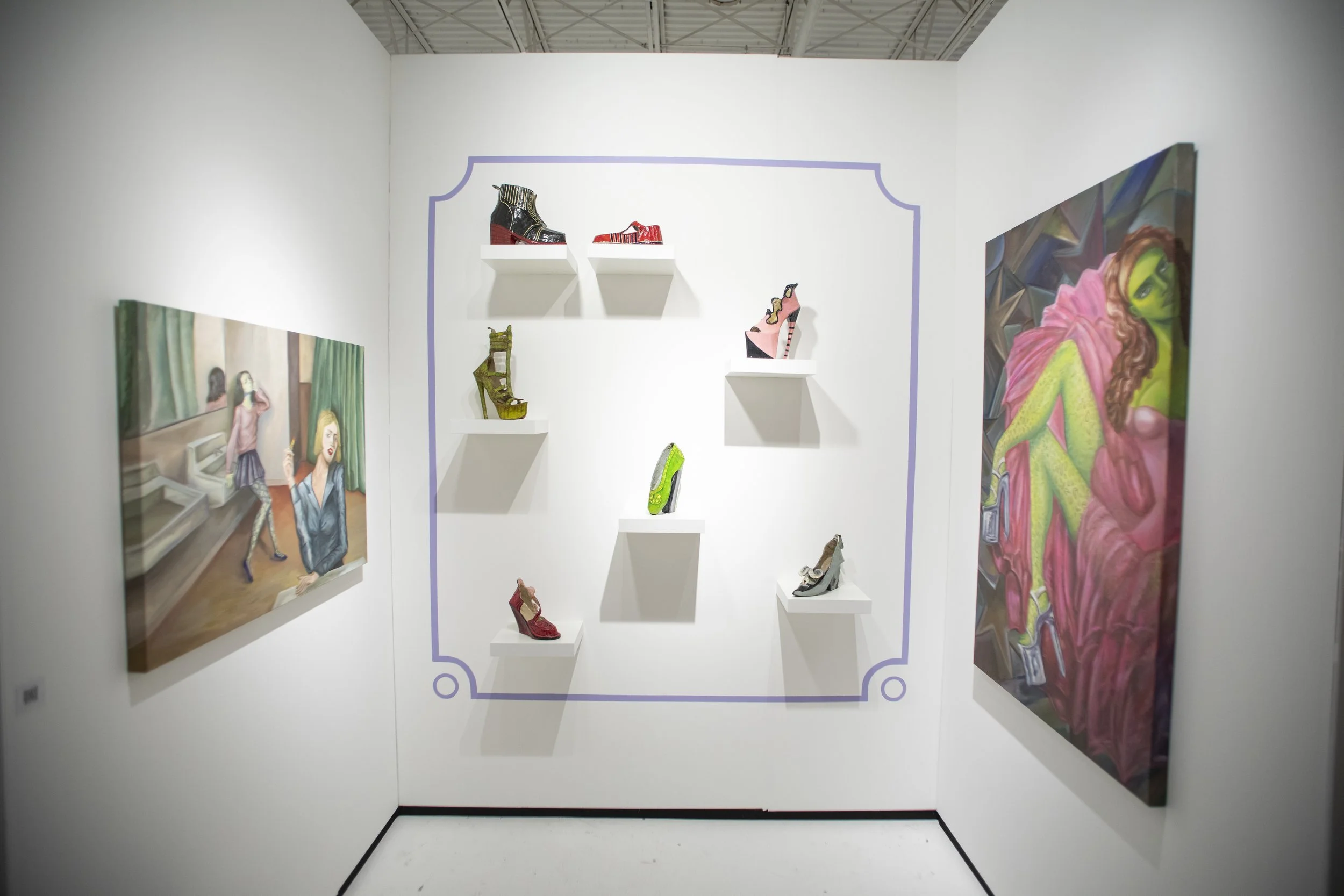
Also in the back room is hipopoety from Buenos Aires with a presentation of paintings by Paloma Klenik and paper-mache sculptures by Juan Gutierrez. The chic figures in the paintings play well juxtaposed with the stilettos and high-end footwear placed on shelves like a zapatería. It’s one of the most unique booths in the fair, and it’s an example of why art fairs are worth going to for viewers.
By Tom Winchester